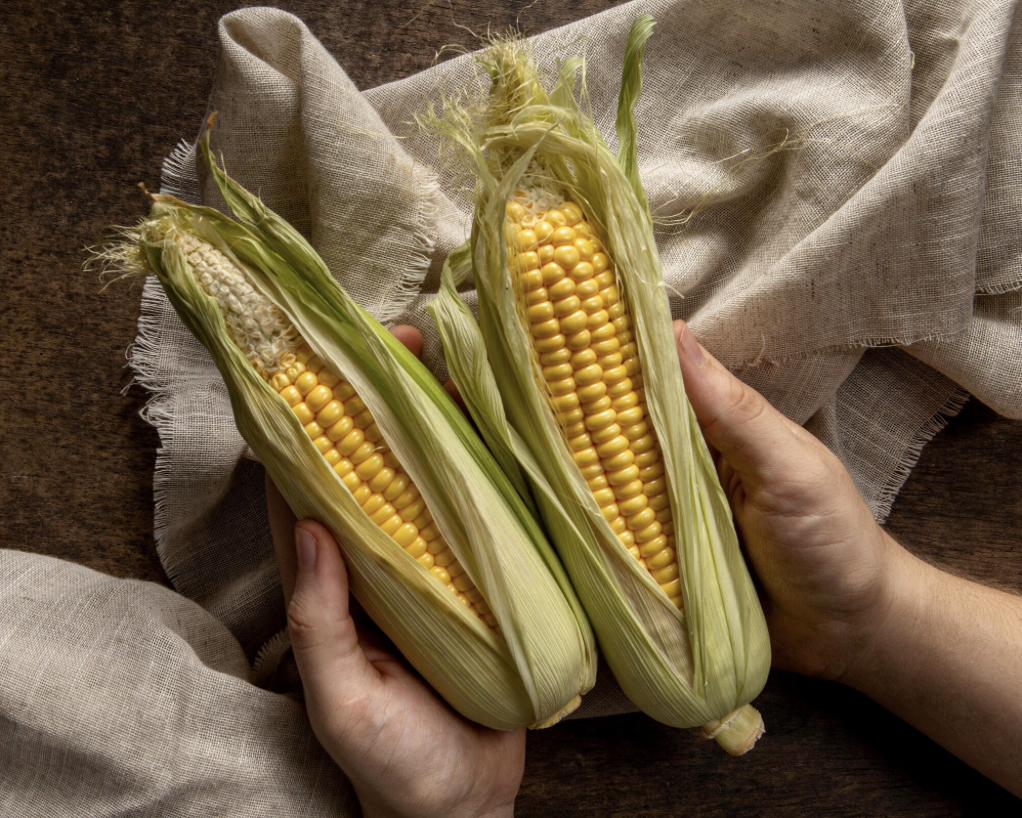
The Carbon Closet gives you a warm welcome to our collection of vegan-leather alternatives, that provide you with the cleanest styles and consciences. Our closets are one of the biggest problem-producing culprits when it comes to unethical production, pollution, and carbon emissions, which is why our platform has quickly become your leading guide for sustainable living and eco-friendly fashion. After exploring numerous other vegan-leather options, we will today be investigating Corn Leather! Join us, from fields to fashion, as we discuss the production, advantages and disadvantages to this versatile veggie!
Production
This production begins by fermenting corn waste product, such as cornstarch, oils and the husks into a biopolyols (a form of bioplastic) and then mixed with recycled polyester or polyurethane to create a leather-like product. Despite the mentions of plastics and bioplastics, it is possible for this vegan-leather to be biodegradable, depending on what it is mixed with, and the appropriate environment that allows for bio-plastic breakdown.
Advantages:
When talking about vegan alternatives, vegetables are the first option that many minds turn to. Let’s explore the pros that prove these minds correct:
1) Foods vs Fabrics
Using the husks and oils of this plant for fabrics not only minimises landfill and waste product but also means that no product is taken away from food sourcing and supply- be it for humans or animals!
2) Leather- likeness
Corn Leather is rumoured to be one of the vegan-leathers with the most likeness to the real deal. It has a refined-texture, similar to cow leather and is quite easy to care for! As with most fabrics, harsh cleaning chemicals should not be used, however this leather can be cleaned with your basic cloths and soapy water.
3) Eco-Ears and Conscious Cobs!
Compared to animal leathers, corn uses significantly less water, no chromium or other harmful chemicals, and produces less than 10% of the CO2 emissions that cow-leather would! This is a no-brainer in terms of which has the greener footprint!
Disadvantages
As is the case with all our previous vegan-leather articles, we are seeing some of these drawbacks persistent in all alternatives. This itself is not unpropitious because if a solution is discovered for one vegan leather, it can likely to utilised for all!
1) Bioplastic Barriers
Similar to multiple of our other vegan-leathers, bioplastics play a big part in binding and backing plant-based matter to form the desired texture and durability. By keeping the ‘bio’ to these plastics, we at least have the ability to biodegrade these materials under controlled conditions.
2) Pesticide Use
Corn is a conventional farm-crop, and quite often utilises pesticides in order to keep the crops pest-resistant and disease-free.
3) Durability
Although the product has not been on the market long enough to know the full story about its durability, it is not predicted to last as long as genuine leather. Some wearers also claim is has limited breathability, and it’s lack of stretch and flexibility makes it unsuitable for particular products.
Start your sustainable fashion journey today
From cobs to cloths, corn leather has an array of brilliant qualities to combat unethical leather productions. As the world becomes more accustomed to vegan alternatives and sustainable solutions, we are bound to find a work-around to the disadvantages discussed in this article. Here at The Carbon Closet, we are proud to display a range of Corn-Leather products that can’t wait to take up new residence in your wardrobe!
We’d love to welcome you back, so sign up to our newsletter and check back here for our next sustainable leather solution!
Hint for next week’s article:
It could end up in your wardrobe, or in your next glass of wine!
We’d love to welcome you back, so sign up to our newsletter and check back here for our next sustainable leather solution!
Hint for next week’s article:
It could end up in your wardrobe, or in your next glass of wine!
