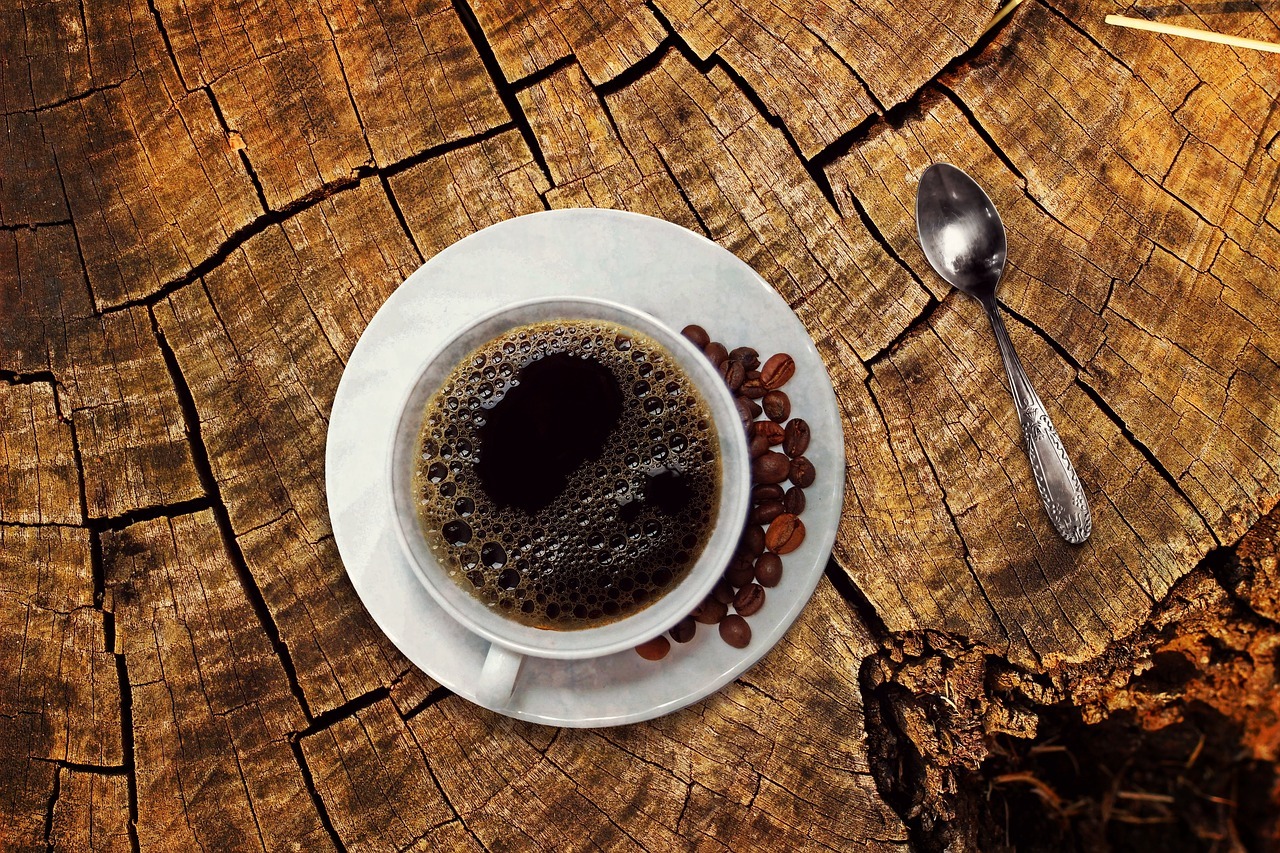
As one of the world’s leading sustainability platforms, The Carbon Closet welcomes you to join us on our journey into the sustainable world of style. Our products are ecological, cruelty free and are made from climate-conscious materials. In case you hadn’t guessed from last week’s hint- and we're brewing with excitement over this one- this article will delve into the research on coffee leather! We will consider the process, advantages and disadvantages of this caffeinated cloth.
Process
Although different manufacturers may use varying methods to create coffee leather, the basis remains the same: coffee grounds are dried and grounded in powder, then mixed with a binding agent, amongst other ingredients which provide the fabric with the desired textures and qualities.
The mixture is then spread into a sheet where further finishings can be applied, or for a sturdier fabric, a backing layer can be added; similar to that we saw in the cactus leather process.
Advantages
There are numerous advantages to coffee leather, encouraged by this materials relation to one of the world’s most popular beverages:
1) Reduced waste
Coffee grounds are already produced just by consuming this morning-drink (which majority of us already do!) and producing fabric from the excess waste is a brilliant way to reduce disposal.
2) Qualities
Depending on the way it was processed, this fabric can be very versatile in its characteristics, meaning it can suit many purposes. It could be flexible and breathable, or a backing layer can be added to improve strength and durability. It also is a beautiful, naturally rich brown colour and retains its pleasant coffee scent!
3) Biodegradable since beans
From when the fabric is nothing more than a coffee bean, right up until its new-found life as a jacket; providing that all natural ingredients and additives are used, this fabric has the potential to be 100% compostable. Alongside this fabric’s construction from waste material, this would establish coffee leather as one of the most eco-friendly fabrics there is!
Drawbacks
The drawbacks to coffee leather remain the same as those that we have investigated previously.
1) Unwanted additives
As always, the addition of any chemicals and treatments will lower the fabrics eco-efficiency. Even with the use of bio-chemicals, the biodegradability of this material will be compromised.
2) Fighting liquid with liquid
Although limited research and knowledge is available for this new and upcoming fabric, it is believed that typically it is not particularly water-resistant, which is plausible given that coffee grounds are mixed with water to produce beverages.
3) Problematic production
Again, due to limited knowledge of this product, manufacturers are yet to find the most effective way to ensure on durability, or successfully dye over the top of a deep, rich colour. Additionally, the natural coffee scent may not be everyone’s cup of tea…
Process
Although different manufacturers may use varying methods to create coffee leather, the basis remains the same: coffee grounds are dried and grounded in powder, then mixed with a binding agent, amongst other ingredients which provide the fabric with the desired textures and qualities.
The mixture is then spread into a sheet where further finishings can be applied, or for a sturdier fabric, a backing layer can be added; similar to that we saw in the cactus leather process.
Advantages
There are numerous advantages to coffee leather, encouraged by this materials relation to one of the world’s most popular beverages:
1) Reduced waste
Coffee grounds are already produced just by consuming this morning-drink (which majority of us already do!) and producing fabric from the excess waste is a brilliant way to reduce disposal.
2) Qualities
Depending on the way it was processed, this fabric can be very versatile in its characteristics, meaning it can suit many purposes. It could be flexible and breathable, or a backing layer can be added to improve strength and durability. It also is a beautiful, naturally rich brown colour and retains its pleasant coffee scent!
3) Biodegradable since beans
From when the fabric is nothing more than a coffee bean, right up until its new-found life as a jacket; providing that all natural ingredients and additives are used, this fabric has the potential to be 100% compostable. Alongside this fabric’s construction from waste material, this would establish coffee leather as one of the most eco-friendly fabrics there is!
Drawbacks
The drawbacks to coffee leather remain the same as those that we have investigated previously.
1) Unwanted additives
As always, the addition of any chemicals and treatments will lower the fabrics eco-efficiency. Even with the use of bio-chemicals, the biodegradability of this material will be compromised.
2) Fighting liquid with liquid
Although limited research and knowledge is available for this new and upcoming fabric, it is believed that typically it is not particularly water-resistant, which is plausible given that coffee grounds are mixed with water to produce beverages.
3) Problematic production
Again, due to limited knowledge of this product, manufacturers are yet to find the most effective way to ensure on durability, or successfully dye over the top of a deep, rich colour. Additionally, the natural coffee scent may not be everyone’s cup of tea…
Start your sustainable fashion journey today
From cup to closet, coffee proves to have a multitude of purposes, and we are excited to see new ways in which such a common and loved flavour can be innovated into something fabulous!
The Carbon Closet stocks coffee-based products- just not in liquid form!- and we’d love to show you all the incredible ways you can strive for sustainability by using vegan-leather and considerate, plant based fabrics.
Visit our website for products and more information on how you can help achieve a carbon-conscious closet.
Here is the hint for next week’s article:
This plant-based product is a popular vegetable on barbeques!
Visit us again to read more!
From cup to closet, coffee proves to have a multitude of purposes, and we are excited to see new ways in which such a common and loved flavour can be innovated into something fabulous!
The Carbon Closet stocks coffee-based products- just not in liquid form!- and we’d love to show you all the incredible ways you can strive for sustainability by using vegan-leather and considerate, plant based fabrics.
Visit our website for products and more information on how you can help achieve a carbon-conscious closet.
Here is the hint for next week’s article:
This plant-based product is a popular vegetable on barbeques!
Visit us again to read more!
