The announcement that Marks & Spencer (M&S) will make its first-ever appearance on the London Fashion Week runway marks a significant moment in British fashion. Long regarded as a dependable high street retailer rather than a trend-setting fashion powerhouse, M&S is celebrating 100 years in fashion by showcasing its collections alongside luxury designers in September 2026 (The Guardian, 2026). Yet beyond the headlines lies a much bigger question: can a high street retailer ever be truly sustainable?
As shoppers become increasingly carbon-conscious, today's fashion choices are no longer based solely on style or price. Consumers want to know where their clothes come from, what they're made from, how they're produced and whether brands are genuinely committed to ethical fashion rather than simply marketing it. M&S's London Fashion Week debut therefore represents more than a milestone for the retailer—it reflects the changing expectations placed on the entire fashion industry.
Why M&S's London Fashion Week Debut Matters
A New Era for the British High Street
For decades, London Fashion Week has been dominated by luxury fashion houses and emerging designer brands. M&S becoming part of the official schedule signals just how much the boundaries between luxury and high street fashion have evolved.
According to The Guardian (2026), M&S's catwalk show is designed to celebrate its centenary in fashion while showcasing collections that customers can purchase immediately through a "see now, buy now" approach. Unlike luxury brands that often release collections months after they appear on the runway, M&S aims to make fashion accessible to everyday shoppers, reinforcing that style should not be exclusive (The Guardian, 2026).
The move also reflects the retailer's remarkable transformation over recent years. Once criticised for outdated clothing, M&S has successfully attracted younger consumers through trend-led collections, improved design teams and social media engagement, particularly on TikTok. But as fashion becomes more desirable, expectations surrounding sustainability rise too.
Can High Street Fashion Really Become Sustainable?
The Challenges Behind Affordable Clothing
High street fashion occupies a difficult position. Consumers expect affordable prices while increasingly demanding sustainable fashion, vegan materials, ethical production and lower carbon emissions.
Producing millions of garments each year inevitably creates environmental impacts through raw material extraction, manufacturing, transport and textile waste. According to the United Nations Environment Programme (UNEP, 2023), the fashion industry remains one of the world's largest contributors to greenhouse gas emissions, water consumption and waste generation.
This doesn't necessarily mean high street fashion cannot improve—but it does mean sustainability becomes about continuous progress rather than perfection.
Rather than asking whether M&S is completely sustainable, perhaps the more important question is whether it is making measurable improvements that move the industry towards circular fashion and lower environmental impact.
How M&S Is Improving Its Sustainability
From Plan A to More Responsible Materials
Unlike many retailers that only recently began focusing on sustainability, M&S launched its Plan A programme back in 2007, making environmental and social responsibility a central part of its long-term business strategy.
Today, Plan A 2030 focuses on reducing carbon emissions across the company's entire value chain, increasing responsible sourcing and designing products that last longer (Marks & Spencer, 2026).
Some of M&S's key sustainability initiatives include:
- sourcing 100% of its cotton from more responsible sources;
- working towards net zero across its operations and supply chain by 2040;
- increasing the use of recycled fibres and lower-impact materials;
- supporting regenerative farming practices;
- reducing unnecessary packaging;
- improving product durability to encourage longer garment lifespans (Marks & Spencer ESG Report, 2026).
M&S has also expanded clothing recycling initiatives and encourages customers to donate unwanted garments through its long-running partnership with Oxfam, helping extend the life of clothing rather than sending it to landfill.
These initiatives align closely with the principles of circular fashion, where garments remain in use for longer through reuse, repair and recycling instead of following the traditional "buy, wear, discard" model.
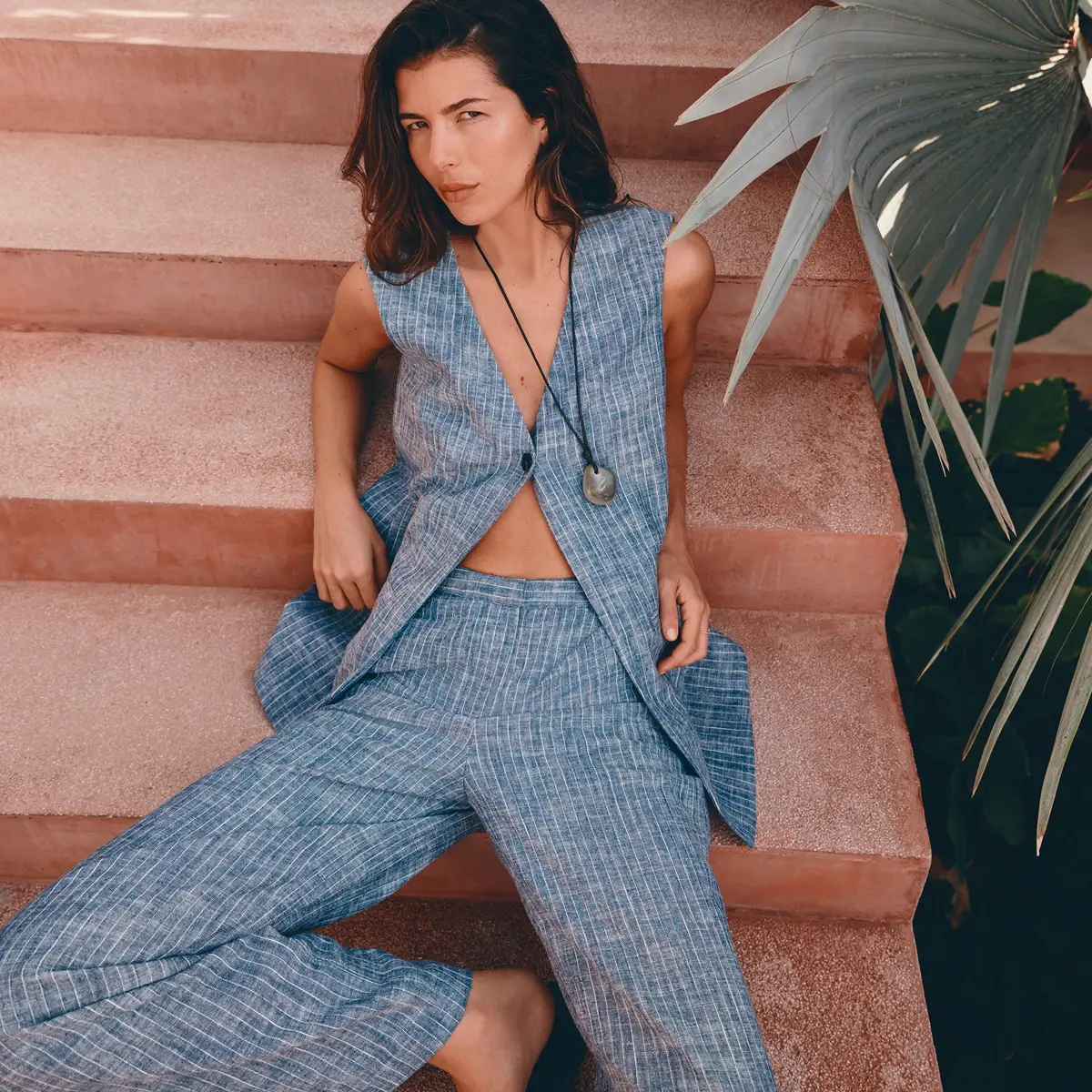
Are These Changes Making a Difference?
Raising the Standard Across the High Street
No retailer can completely eliminate its environmental footprint while producing clothing at scale. However, major retailers like M&S have enormous influence over suppliers, manufacturers and consumer behaviour.
When a retailer sourcing millions of garments switches to more responsible cotton or increases recycled materials, the environmental benefits can be significant because of the scale involved.
Importantly, sustainability is also becoming a competitive advantage. Consumers increasingly reward brands that demonstrate transparency, durability and ethical sourcing rather than simply offering the lowest prices.
Organisations including the Ellen MacArthur Foundation continue to advocate for a circular economy in fashion, highlighting that designing products to last longer and keeping textiles in circulation are among the most effective ways to reduce fashion's environmental impact (Ellen MacArthur Foundation, 2023).
That said, M&S still faces challenges. Some collections continue to include synthetic fibres derived from fossil fuels, and the retailer must balance trend-led fashion with avoiding overproduction. Like most high street brands, there is still work to do before its operations could be considered fully sustainable.
However, compared with many competitors, M&S has demonstrated a willingness to invest in measurable environmental improvements rather than relying solely on sustainability messaging.
What This Means for Everyday Shoppers
Sustainability Starts With Better Buying Habits
Perhaps the biggest takeaway from M&S's London Fashion Week debut is that sustainable fashion is no longer a niche movement reserved for luxury brands or eco labels. It is becoming part of mainstream retail.
As consumers, our purchasing decisions remain one of the most powerful tools we have.
Choosing well-made garments, favouring natural or recycled fibres, supporting brands investing in ethical fashion, repairing clothing, shopping second-hand and buying only what we genuinely need can all significantly reduce fashion's carbon footprint.
Whether a garment comes from a luxury designer or a high street retailer matters less than how long it is worn. Extending a garment's life by just nine months can substantially reduce its environmental impact through lower demand for new production (WRAP, 2023).
The future of sustainable fashion therefore depends not only on retailers improving their practices but also on consumers embracing more thoughtful, carbon-conscious wardrobes.
Building a More Sustainable Wardrobe Together
M&S's London Fashion Week debut demonstrates how quickly the fashion industry is changing. It highlights that style, accessibility and sustainability are increasingly expected to go hand in hand. While no large retailer has solved every environmental challenge, continued investment in responsible materials, circular fashion initiatives and ethical production shows that meaningful progress is possible.
At The Carbon Closet, we believe informed choices create lasting change. As a sustainable fashion platform, we help consumers explore carbon-conscious clothing, understand ethical fashion, discover innovative materials and build wardrobes that are kinder to both people and the planet. Whether you're looking to shop more sustainably or simply learn more about the future of fashion, we're here to help you make every purchase count.
Shop from our website for the most ethical, conscious brands and sign up to our newsletter to stay informed on all the latest sustainable fashion news.
Enjoyed this? here are some more articles we think you'll love:
