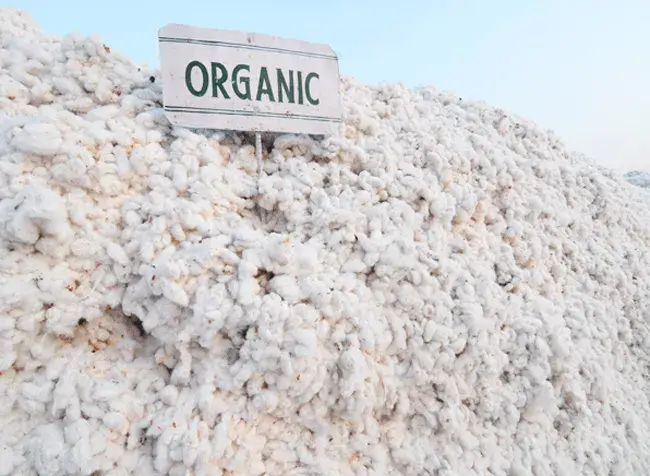
From Seed to Sustainability: Understanding the True Cost of Cotton
At The Carbon Closet, we talk a lot about choosing natural fibres, especially organic cotton, but what is the actual difference?
Cotton is often marketed as one of the most natural and environmentally friendly fibres available, but the reality is far more complex. While both conventional and organic cotton begin life as the same humble plant, the way they are grown, processed, manufactured, worn and eventually disposed of creates two completely different environmental stories. Behind every cotton T-shirt, pair of jeans or bed sheet is a production chain that stretches across multiple countries, consumes vast amounts of natural resources and influences the health of ecosystems, farming communities and our climate.
Today, cotton accounts for approximately a quarter of all fibres used in global textile production (Textile Exchange, Preferred Fiber & Materials Market Report, 2024). As consumers become increasingly interested in sustainable fashion, ethical fashion, carbon-conscious shopping, vegan clothing and circular fashion, understanding this journey has never been more important. Every purchasing decision supports a particular way of producing clothing. Choosing between conventional and organic cotton is therefore about much more than reading a label—it is about deciding what kind of fashion industry we want to encourage.
This article follows the complete life cycle of both conventional and organic cotton, from the moment a seed is planted to the point a garment reaches the end of its life. Along the way, we'll explore why farming methods matter, how processing impacts the environment, what happens after we throw clothing away, and why organic cotton represents one of the simplest yet most powerful ways consumers can reduce fashion's environmental footprint.
The Life Cycle of Conventional Cotton
Stage One: Growing Conventional Cotton – Where Environmental Impact Begins
Although cotton is a natural fibre, conventional cotton farming is one of the most chemically intensive forms of agriculture in the world. Cotton occupies only around 2.4–2.5% of global agricultural land, yet it accounts for approximately 14–16% of all insecticides sold worldwide and around 10% of pesticides overall (FAO; Pesticide Action Network UK). These chemicals are used to protect crops from insects, weeds and diseases, helping farmers maximise yields, but they also create significant environmental consequences.
Before planting even begins, fields are often intensively cultivated to remove existing vegetation. Large quantities of synthetic nitrogen fertilisers are applied to increase crop growth, while herbicides eliminate competing weeds. These fertilisers release nitrous oxide—a greenhouse gas nearly 300 times more potent than carbon dioxide over a 100-year period—which contributes significantly to climate change (Intergovernmental Panel on Climate Change, IPCC).
Many conventional cotton varieties are genetically modified (GM) to resist certain insects or tolerate herbicides. While these technologies have reduced some insecticide applications in particular regions, they have also increased dependence on specific herbicides and contributed to the emergence of herbicide-resistant weeds, requiring even greater chemical inputs over time (FAO).
Water is another major concern. Cotton is often grown in regions with hot, dry climates, requiring substantial irrigation. The exact amount of water varies depending on rainfall, soil type and farming practices, but cotton remains one of agriculture's thirstiest commercial crops. The World Wildlife Fund estimates that producing just one conventional cotton T-shirt can require around 2,700 litres of water across its entire production process—roughly what one person drinks in two and a half years (WWF). Excessive irrigation has contributed to environmental disasters such as the shrinking of the Aral Sea in Central Asia, once one of the world's largest freshwater lakes.
The effects extend beyond water consumption alone. Runoff carrying fertilisers, pesticides and herbicides enters nearby rivers and groundwater, reducing water quality, harming aquatic ecosystems and threatening biodiversity. Pollinating insects, birds and beneficial soil organisms can all be affected, while repeated chemical use gradually degrades soil health, reducing its natural ability to retain water and store carbon. Healthy soil is one of nature's most valuable carbon sinks, meaning degraded farmland contributes not only to biodiversity loss but also to climate change.
For the people growing our clothes, the risks can be equally significant. Although regulations have improved in many countries, agricultural workers may still be exposed to hazardous pesticides through spraying or contaminated water if protective equipment or training is inadequate. The World Health Organization continues to identify pesticide exposure as an important occupational health issue in agriculture globally (WHO).
From the very beginning of the production chain, conventional cotton demonstrates how a fibre that appears completely natural can carry a surprisingly large environmental footprint before it has even left the farm.
Harvesting, Ginning and Preparing Cotton for Manufacturing
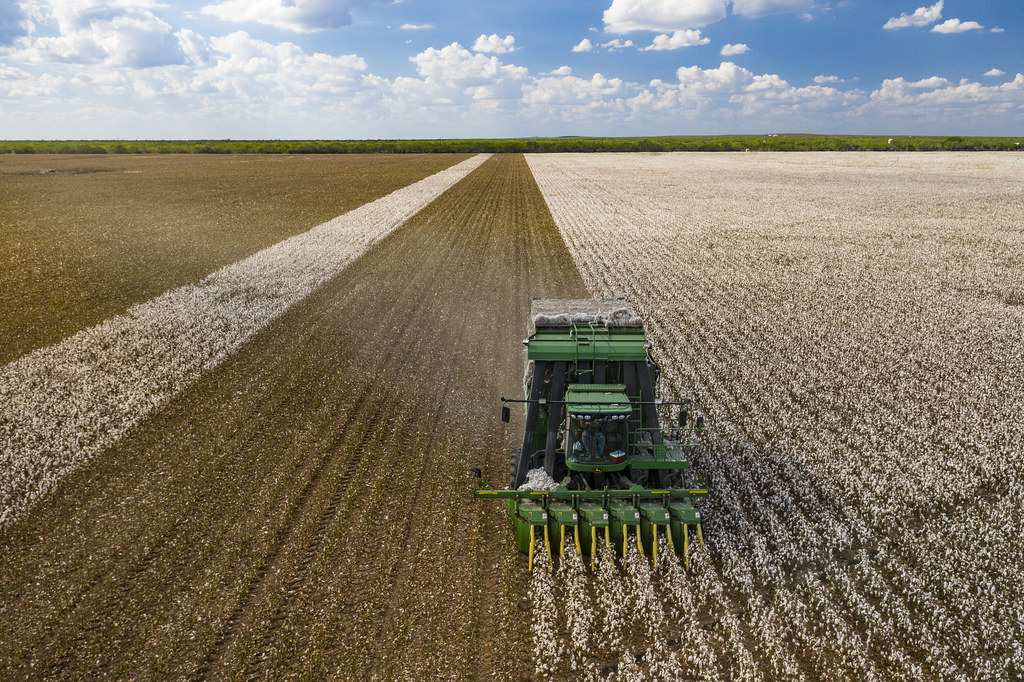
Once the cotton bolls have fully matured and burst open, revealing the soft white fibres inside, harvesting begins. In highly industrialised countries such as the United States and Australia, enormous mechanical harvesters strip cotton from the plants in a matter of hours. In many developing countries, however, cotton is still picked by hand, providing employment for millions of people but also raising concerns around labour rights and working conditions in some regions.
Freshly harvested cotton is not yet suitable for making textiles. It contains seeds, stems, leaves and other plant material that must first be removed through a process known as ginning. Cotton gins separate the valuable fibres from the seeds, compressing the cleaned cotton into dense bales weighing hundreds of kilograms. These bales are then transported—sometimes thousands of miles—to spinning mills located elsewhere in the world.
The global nature of the textile industry means a single cotton T-shirt may already have travelled across several countries before becoming fabric. Cotton grown in the United States might be shipped to India for spinning, woven into fabric in Pakistan, dyed in China, stitched into garments in Bangladesh and finally sold to consumers across Europe. Every stage involves transportation by road, rail or sea, adding further greenhouse gas emissions to the garment's overall carbon footprint (Ellen MacArthur Foundation).
At the spinning mill, cotton fibres are cleaned once again before passing through carding and combing machines, which align the fibres into long, continuous strands. These strands are twisted together to produce yarn of varying thickness depending on the intended product. Modern spinning machinery consumes significant amounts of electricity, meaning the carbon intensity of the process depends heavily on the energy source used within each manufacturing country.
Although these early manufacturing stages receive far less public attention than cotton farming itself, they represent an important transition in the production chain. By the time the cotton has been transformed into yarn, substantial amounts of energy, water and transportation have already been invested, long before the garment begins to resemble the clothing we eventually purchase.
From Fibre to Fabric: The Hidden Environmental Cost of Textile Manufacturing
Spinning, Weaving, Dyeing and Finishing – Where Cotton Becomes Clothing
By the time cotton leaves the spinning mill as yarn, many people assume the most environmentally intensive part of its journey is over. In reality, textile manufacturing is often one of the most resource-intensive stages of a garment's life cycle. Transforming soft cotton fibres into colourful, durable clothing requires vast amounts of energy, water and chemical treatments, many of which remain invisible to consumers browsing shop rails.
The first step is converting yarn into fabric. Cotton yarn is either woven, where threads are interlaced at right angles to create structured fabrics such as denim, poplin and canvas, or knitted, where loops of yarn produce softer, stretchier fabrics used in T-shirts, sweatshirts and jersey garments. Modern weaving and knitting machines operate continuously and require significant amounts of electricity, meaning their environmental impact depends largely on the energy sources available within each manufacturing region.
Once the fabric has been produced, it undergoes a series of finishing processes to achieve the appearance and feel consumers expect. Raw cotton is naturally cream-coloured rather than bright white, so manufacturers commonly bleach fabrics before dyeing. Conventional bleaching often relies on chemical oxidising agents such as hydrogen peroxide, while dyeing introduces hundreds of different chemical formulations depending on the desired colour and performance characteristics.
According to the United Nations Environment Programme (UNEP), textile dyeing and finishing are responsible for approximately 20% of global industrial wastewater pollution, making them among the largest industrial sources of water contamination worldwide (UNEP, Putting the Brakes on Fast Fashion, 2023). Without effective wastewater treatment, dyes, salts, heavy metals and finishing chemicals can enter rivers and lakes, affecting aquatic ecosystems and reducing water quality for surrounding communities.
Many garments also receive additional chemical finishes to enhance performance or appearance. These treatments may improve wrinkle resistance, stain repellency, softness, flame resistance or water repellence. While some finishes improve durability and extend a garment's usable life, others introduce chemicals that persist in the environment or make textile recycling more difficult. Fortunately, increasing regulation in many regions is encouraging manufacturers to replace hazardous substances with safer alternatives, particularly within certified organic and responsible textile supply chains.
Every decision made during manufacturing—from the source of electricity powering the factory to the treatment of wastewater—shapes the environmental footprint of the finished garment. Although these processes occur far from most consumers, they represent one of the most significant opportunities for the fashion industry to reduce pollution and move towards genuinely sustainable production.
Cut, Sew, Ship and Sell: The Global Journey of a Cotton Garment
A Supply Chain That Crosses Continents
Very few garments are produced entirely within one country. Today's fashion industry relies on highly complex global supply chains, with each manufacturing stage often taking place wherever labour, infrastructure or specialist expertise is most readily available.
After dyeing and finishing, fabric is transported to garment factories where skilled workers lay out large sheets of material before cutting hundreds of individual pattern pieces using automated cutting machines or precision hand tools. These pieces are then stitched together through multiple stages of production, with different workers specialising in sleeves, collars, waistbands, seams or finishing details.
This stage of production highlights that sustainability is not solely an environmental issue—it is also a social one. Ethical fashion considers whether workers throughout the supply chain receive fair wages, safe working conditions and appropriate labour protections. Over the past decade, increasing consumer awareness has encouraged many brands to publish greater information about their suppliers and improve transparency, although challenges remain across parts of the global textile industry.
Finished garments are pressed, labelled, packaged and transported around the world by ship, rail, road and, in some cases, air freight. While maritime shipping is generally more carbon-efficient than air transport, moving millions of garments across continents still contributes significantly to fashion's greenhouse gas emissions (Ellen MacArthur Foundation).
Once clothing reaches retailers, another hidden environmental cost emerges. Fashion businesses often overproduce garments in anticipation of consumer demand. Unsold stock may be discounted, stored for extended periods or, in some unfortunate cases, destroyed. Although many brands are now moving away from this practice due to changing legislation and public pressure, overproduction remains one of the defining challenges of the modern fashion industry. Producing clothing that is never worn represents a waste of every litre of water, every kilogram of cotton and every unit of energy invested throughout the production chain.
The Consumer's Role: The Part of the Cotton Lifecycle We Control
Looking After Our Clothes Matters More Than We Think
When a cotton garment finally reaches our wardrobe, its environmental journey is far from over. In fact, the choices we make as consumers can significantly influence its total carbon footprint.
Every wash requires water, electricity and detergent. Tumble drying is one of the most energy-intensive household activities, while frequent ironing adds further energy consumption throughout a garment's lifetime. Research from the Ellen MacArthur Foundation suggests that extending the active life of clothing by just nine additional months can reduce its carbon, water and waste footprints by around 20–30%, depending on the garment and usage patterns.
Fortunately, caring for clothing sustainably is often remarkably simple. Washing at lower temperatures, waiting until garments genuinely need cleaning, using full washing machine loads, avoiding unnecessary tumble drying and repairing small tears instead of replacing items all help reduce environmental impact. Air drying, in particular, dramatically lowers lifetime emissions while also extending the lifespan of cotton fibres by reducing heat damage.
Buying fewer, better-made garments also plays a crucial role. High-quality clothing that remains wearable for many years spreads the environmental impact of production over a much longer period, making each wear considerably more sustainable than frequently replacing low-cost, short-lived fashion items.
Ultimately, the most sustainable garment is often the one that is already hanging in your wardrobe. Caring for it properly keeps valuable resources in use for longer and supports the principles of slow fashion and circular fashion, where products are designed to remain in circulation rather than becoming waste after only a handful of wears.
The End of the Line: What Happens When Cotton Clothing Is Thrown Away?
Landfill, Recycling or a Second Life?
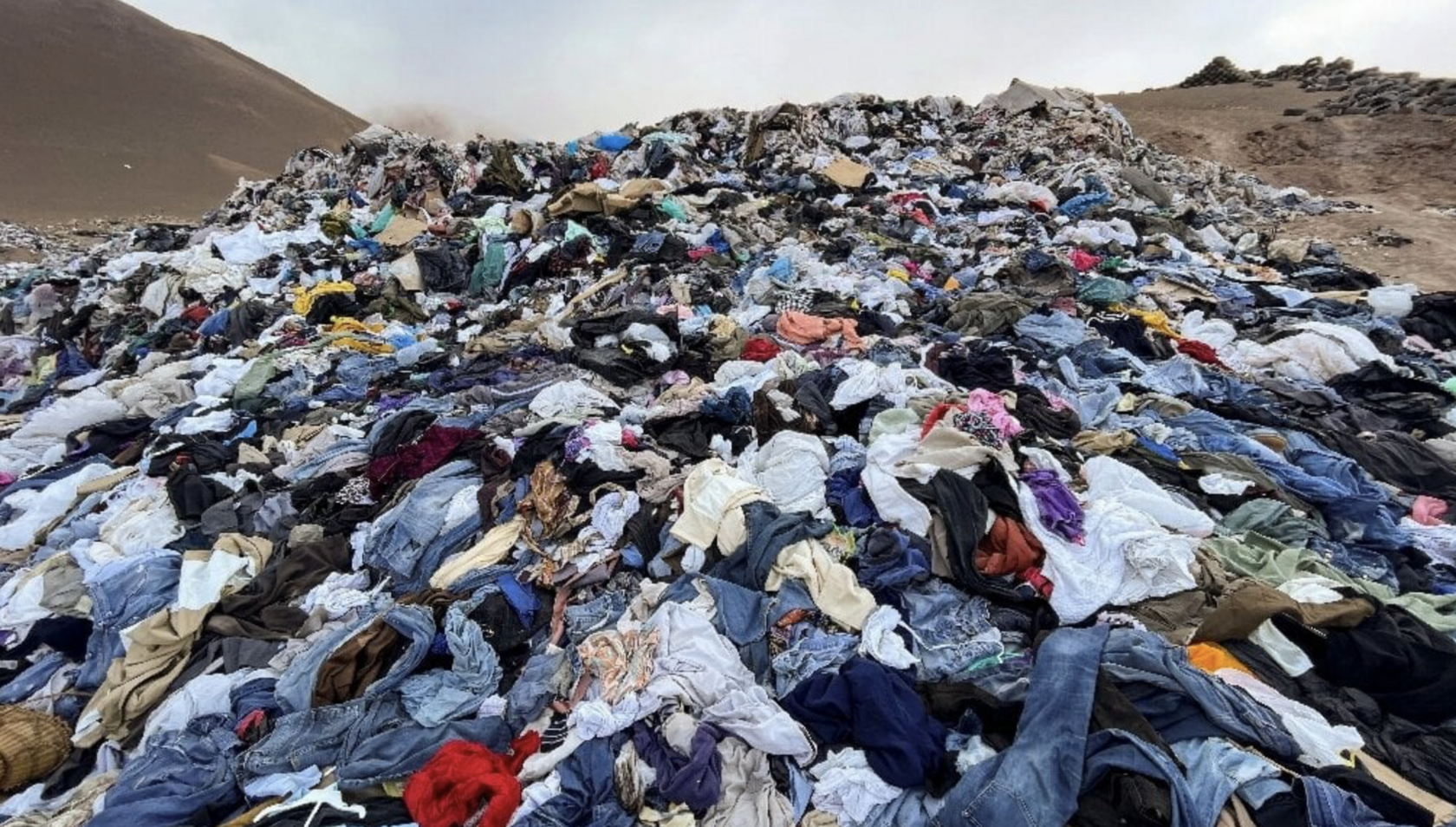
Every year, millions of tonnes of clothing reach the end of their useful lives. Unfortunately, much of it never gets a second chance.
If a conventional cotton garment is thrown into household waste, it is likely to end up in landfill or be incinerated. While cotton is a biodegradable natural fibre, decomposition in landfill is often slow because waste is compacted and deprived of oxygen. As organic materials break down under these conditions, they can release methane—a greenhouse gas significantly more potent than carbon dioxide over shorter timescales (UNEP).
Recycling offers a far better alternative, but it is not always straightforward. Pure cotton garments are generally easier to recycle into new fibres, insulation materials or industrial products. However, modern clothing frequently blends cotton with polyester, elastane or nylon to improve stretch, durability or wrinkle resistance. These blended fabrics are considerably more difficult to separate into their original fibres, limiting opportunities for high-quality fibre-to-fibre recycling.
This challenge is one reason why circular fashion has become such an important concept within the sustainable fashion industry. Rather than following the traditional linear model of take, make, use and dispose, circular fashion aims to keep materials in use for as long as possible through better design, repair, resale, rental, remanufacturing and recycling (Ellen MacArthur Foundation).
Choosing garments made from high-quality natural fibres, looking after them carefully and ensuring they are reused, repaired or recycled wherever possible helps reduce demand for virgin resources and keeps valuable materials circulating within the economy instead of becoming waste.
The story of conventional cotton does not necessarily end badly—but without conscious choices from brands, manufacturers and consumers alike, too many garments complete their journey in landfill long before they have reached the end of their true potential.
The Organic Cotton Journey: A Different Story from the Very Beginning
Farming With Nature, Not Against It
Although conventional and organic cotton originate from the same plant species, their journeys begin in fundamentally different ways. Organic cotton is grown according to strict agricultural standards that prohibit the use of synthetic pesticides, synthetic fertilisers and genetically modified (GM) seeds. Instead of relying on intensive chemical inputs, organic farmers work with natural ecosystems, encouraging healthy soils, biodiversity and resilient farming systems that can continue producing crops for generations (Global Organic Textile Standard (GOTS); Textile Exchange).
Rather than treating the soil simply as a medium in which plants grow, organic agriculture views it as a living ecosystem. Healthy soils contain billions of microorganisms, fungi, insects and earthworms that recycle nutrients, improve soil structure and naturally support plant growth. Organic farmers nourish this ecosystem through compost, animal manure where appropriate, green manures, crop residues and carefully planned crop rotations rather than synthetic fertilisers.
Crop rotation is one of the most important differences between conventional and organic cotton farming. Instead of planting cotton in the same fields year after year, farmers alternate cotton with legumes, grains or other crops that naturally replenish soil nutrients and interrupt pest life cycles. This reduces the need for chemical pest control while improving soil fertility over time.
Healthy soils also act like natural sponges. Rich organic matter increases the soil's ability to absorb and retain rainfall, helping crops withstand periods of drought and reducing the need for irrigation. While no form of cotton farming is entirely water-free, many organic systems rely far more heavily on rainfall than artificially irrigated conventional farms, reducing pressure on rivers and groundwater supplies (Textile Exchange; Soil Association).
Perhaps most importantly, eliminating synthetic pesticides protects wildlife that conventional agriculture often unintentionally harms. Pollinating insects, birds, beneficial beetles and soil organisms all play vital roles in maintaining balanced ecosystems. Instead of attempting to eradicate every insect, organic farmers encourage natural predators to keep pest populations under control, creating a healthier and more resilient agricultural landscape.
As concerns about climate change continue to grow, these farming practices offer another significant advantage. Healthier soils rich in organic matter are capable of storing greater quantities of carbon, making well-managed farmland an increasingly important part of climate mitigation strategies. Although organic farming alone cannot solve climate change, improving soil health is recognised by scientists as one valuable tool for increasing carbon sequestration while protecting biodiversity (IPCC; FAO).
From Organic Fibre to Organic Clothing
Certification Matters as Much as Farming
Growing cotton organically is only the first step. If those fibres are later processed using hazardous chemicals or mixed with conventional cotton without proper traceability, many of the environmental benefits can be lost. This is why independent certification plays such an important role throughout the organic cotton supply chain.
The most widely recognised certification is the Global Organic Textile Standard (GOTS). Unlike labels that focus solely on how cotton is grown, GOTS monitors the entire textile production process—from harvesting and spinning to dyeing, manufacturing and packaging. It restricts the use of many hazardous chemicals, requires responsible wastewater treatment and includes strict social criteria covering working conditions throughout certified facilities.
Another important certification is the Organic Content Standard (OCS), developed by Textile Exchange. OCS verifies that products contain organically grown fibres and provides traceability throughout the supply chain, helping consumers and brands confirm the authenticity of organic materials.
These certifications are significant because they move beyond marketing claims. Words such as natural, eco-friendly, green or responsibly sourced have no universal legal definition in many markets. Independent certification provides consumers with confidence that environmental standards have been assessed by third-party organisations rather than relying solely on a company's own sustainability messaging.
Organic cotton garments are also less likely to undergo some of the harsher chemical finishing treatments commonly used in conventional textile production. Although dyes and processing are still necessary, certified manufacturers must comply with strict restrictions on hazardous substances, reducing risks to factory workers, surrounding communities and local waterways.
The result is a garment whose environmental footprint has been considered throughout its entire production chain—not simply at the farming stage.
Organic Cotton at the End of Its Life
Supporting a Truly Circular Fashion Economy
One of the greatest advantages of organic cotton extends beyond how it is produced—it also influences what happens after we have finished wearing it.
Like all cotton, organic cotton is a biodegradable natural fibre when it is not heavily blended with synthetic materials or coated in persistent chemical finishes. Under the right conditions, this allows the fibre to return to natural biological systems rather than remaining in the environment for hundreds of years like many petroleum-based synthetic textiles.
Organic cotton also fits naturally within the principles of circular fashion. Circular fashion aims to design waste out of the system by creating garments that remain valuable for as long as possible through repair, resale, rental, fibre-to-fibre recycling and responsible composting where appropriate.
When clothing is made from high-quality organic cotton, it is generally easier to recycle mechanically into new textile fibres than garments containing complex synthetic blends. Researchers are also developing increasingly sophisticated chemical recycling technologies capable of recovering cellulose from cotton textiles and transforming it into new fibres without continually relying on virgin raw materials. While these technologies are still expanding globally, they represent an exciting step towards a genuinely circular textile industry.
Consumers also tend to treat higher-quality organic cotton garments differently. Rather than being viewed as disposable fashion, they are more likely to be repaired, donated, resold or passed between family members, extending their useful life considerably. Every additional year a garment remains in use reduces the need for new raw materials, lowers waste generation and spreads the environmental impact of production across many more wears.
The most sustainable garment is not simply one made from organic cotton—it is one that is designed to last, cared for responsibly and kept in circulation for as long as possible.
Organic Cotton vs Conventional Cotton: Why the Difference Matters
Two Similar Fibres, Two Very Different Environmental Stories
At first glance, two white cotton T-shirts may appear identical. They may feel similar, weigh the same and even carry comparable price tags. Yet the environmental story behind each garment can be remarkably different.
Conventional cotton often relies on synthetic pesticides, synthetic fertilisers and intensive irrigation to maximise production. These practices can contribute to declining soil health, biodiversity loss, water pollution and greenhouse gas emissions throughout the agricultural stage of the supply chain. Although improvements continue to be made within conventional agriculture, its dependence on chemical inputs remains one of its greatest environmental challenges.
Organic cotton takes a different approach. By eliminating synthetic pesticides and fertilisers, encouraging crop rotation, protecting soil biodiversity and promoting healthier ecosystems, organic farming seeks to work alongside natural systems rather than replacing them with chemical alternatives. While organic yields can sometimes be lower and farming requires careful management, the broader environmental benefits are widely recognised by organisations including Textile Exchange, the Soil Association and the Food and Agriculture Organization of the United Nations.
It is also important to acknowledge that organic cotton is not a perfect solution. Processing, transportation, manufacturing and consumer care still contribute to its overall environmental footprint. A poorly made organic cotton T-shirt that is worn only a handful of times is unlikely to be more sustainable than a durable garment worn regularly for many years. Sustainability is therefore about both how clothing is produced and how it is used.
Nevertheless, when comparing fibres on a life-cycle basis, certified organic cotton consistently represents one of the strongest choices available for consumers seeking sustainable fashion, ethical fashion and a more carbon-conscious wardrobe. It reduces reliance on harmful agricultural chemicals, supports healthier ecosystems and aligns naturally with the growing movement towards circular fashion.
Understanding Sustainability Claims: Why Organic Cotton Isn't the Same as "Better Cotton"
Looking Beyond the Label
As demand for sustainable fashion continues to grow, consumers are being presented with an increasing number of environmental labels, certifications and marketing claims. Terms such as eco-friendly, natural, responsibly sourced, carbon-conscious and better cotton appear on clothing labels with increasing frequency, yet they do not all mean the same thing. Understanding these differences is essential if we want to make genuinely informed purchasing decisions.
One of the most recognised initiatives within the conventional cotton industry is Better Cotton (formerly the Better Cotton Initiative, or BCI). Established in 2005, Better Cotton was created to improve conventional cotton farming by encouraging growers to reduce water use where possible, improve pesticide management, protect soil health and promote better working conditions for farming communities (Better Cotton, 2024).
These are worthwhile objectives, and there is evidence that Better Cotton has encouraged many farmers to adopt more efficient agricultural practices. However, it is important to understand that Better Cotton is not an organic certification. Farmers participating in the programme may still use synthetic pesticides, synthetic fertilisers and genetically modified cotton where permitted. The programme focuses on improving conventional farming rather than replacing it with organic agriculture.
Another source of consumer confusion is the U.S. Cotton Trust Protocol, a programme launched by the National Cotton Council of America to demonstrate improvements in the environmental performance of American-grown cotton. The protocol measures indicators such as greenhouse gas emissions, water use, soil conservation and land management, helping participating farms benchmark and improve their environmental performance over time.
Like Better Cotton, the U.S. Cotton Trust Protocol represents an important effort to improve sustainability within conventional agriculture. However, participation does not mean the cotton has been grown organically. Conventional pesticides, synthetic fertilisers and genetically modified seed varieties may still be used within the programme. For consumers specifically seeking organic cotton, the Trust Protocol should therefore be viewed as a sustainability improvement initiative rather than an alternative to certified organic production.
This distinction is important because marketing language can sometimes blur the lines between better and best. A label describing cotton as more sustainable does not necessarily mean it has eliminated the environmental impacts associated with conventional farming. Instead, it often indicates that efforts have been made to reduce those impacts relative to traditional production methods.
This is not an example of every programme being misleading—far from it. Many initiatives are making genuine progress within existing agricultural systems. However, the diversity of sustainability claims highlights why independent certification remains so valuable. Standards such as the Global Organic Textile Standard (GOTS) and the Organic Content Standard (OCS) require rigorous third-party verification, giving consumers greater confidence that environmental claims have been independently assessed rather than relying solely on company marketing.
Ultimately, the most sustainable choice is not always the product with the greenest packaging or the boldest environmental claim. It is the one supported by transparent evidence, robust certification and a commitment to improving every stage of the production chain.
How Consumers Can Make More Carbon-Conscious Choices
Small Decisions Create Big Change
It is easy to feel overwhelmed by the environmental challenges facing the fashion industry. Global supply chains are complex, sustainability claims can be confusing and no single fibre offers a perfect solution. Yet this should not discourage us. Every purchase represents an opportunity to support better farming practices, higher manufacturing standards and a more responsible fashion industry.
Choosing certified organic cotton whenever possible is one of the simplest ways to reduce your clothing's environmental footprint. Looking for recognised certifications such as GOTS or OCS helps ensure that environmental claims have been independently verified rather than relying solely on marketing language.
Equally important is changing the way we think about clothing itself. Instead of asking "How cheaply can I buy this?", we might ask "How many years could I wear this?" A well-made organic cotton shirt worn hundreds of times will almost always have a lower environmental impact than several poorly made alternatives that quickly end up in landfill.
Supporting brands that prioritise transparency, ethical manufacturing and natural fibres encourages the wider industry to invest in better production methods. Washing garments at lower temperatures, repairing small tears, buying second-hand where appropriate and recycling unwanted clothing responsibly all contribute to extending the life of valuable materials and reducing demand for virgin resources.
The future of fashion will not be shaped by one revolutionary invention. It will be shaped by millions of everyday decisions made by farmers, manufacturers, designers, retailers and consumers alike. Together, these choices can help move the industry away from a linear model of extraction, consumption and waste towards a genuinely circular system that values resources for as long as possible.
Cotton at a Glance: Conventional vs Organic Cotton
Growing a Better Future, One Garment at a Time
The journey of a cotton garment begins long before it reaches our wardrobes. From the condition of the soil in which the seed is planted to the water used during dyeing, the factories that stitch each seam and the choices we make after bringing it home, every stage leaves an environmental footprint.
Conventional cotton has played an important role in clothing the world for centuries, and improvements are being made across many areas of the industry. However, its reliance on synthetic pesticides, fertilisers and resource-intensive farming continues to place considerable pressure on biodiversity, freshwater supplies and our changing climate. Organic cotton demonstrates that another path is possible—one that works with nature rather than against it, protecting soil health, reducing chemical pollution and supporting more resilient farming systems for future generations.
While no fibre is entirely impact-free, choosing certified organic cotton, buying fewer but better-made garments, caring for clothing properly and embracing the principles of sustainable fashion, ethical fashion, carbon-conscious living and circular fashion all contribute towards a more responsible relationship with what we wear.
Discover Fashion That Makes a Difference
Every clothing choice tells a story. At The Carbon Closet, we believe that story should be one of transparency, responsibility and positive change. As a sustainable fashion platform, we make it easier to discover brands that prioritise organic cotton, natural fibres, ethical production and circular fashion principles, helping you build a wardrobe that reflects both your personal style and your values. Together, we can support a fashion industry that protects people, preserves the planet and proves that looking good should never come at the Earth's expense.
Shop here on our website for organic cotton clothing and sign up to our newsletter to stay informed on all the best sustainable materials for your ethical wardrobe.
- Enjoyed this? Here are some more articles we think you'll love:
- The Great American Cotton Debate: Is Cotton Really The Sustainable Choice?
- Why You Should Switch To Organic Cotton Underwear
- Lead In Clothing: The Hidden Health Risk
